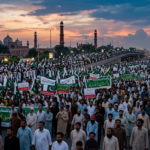
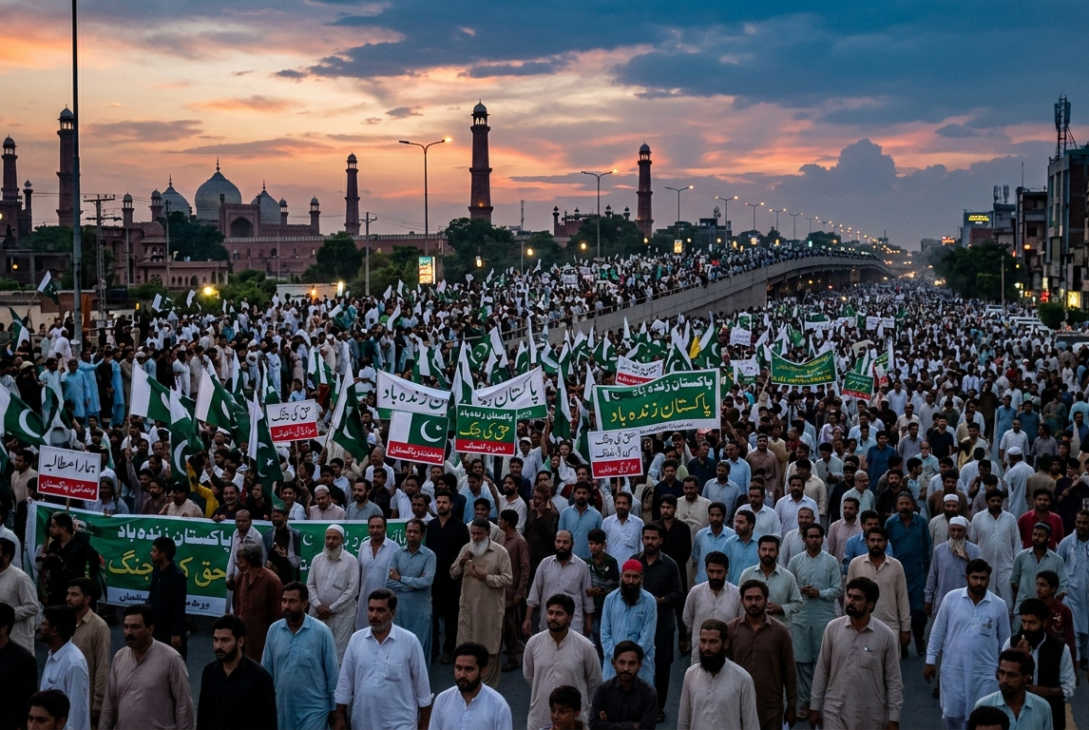
LAHORE — Tens of thousands of supporters of Pakistan Tehreek-e-Insaf took to the streets across the country this week, renewing their demand for the release of former Prime Minister Imran Khan in what party leaders are calling the beginning of a sustained civil disobedience campaign. Chants of accountability and cries of injustice echoed from Karachi to Peshawar as the movement showed few signs of losing momentum.
Khan, the cricket legend-turned-populist politician, has now spent considerable time in pre-trial or post-conviction detention, his legal battles multiplying even as his party continues to dominate online political discourse. Hashtags demanding his freedom have consistently trended at the top of Pakistani Twitter for weeks, reflecting the deep passions the former premier continues to inspire.
The Legal Labyrinth
Khan’s detention rests on a thicket of overlapping legal proceedings — corruption charges, violations of the Official Secrets Act, and several contempt cases — that his lawyers describe as a coordinated state effort to permanently sideline him from politics. The government and security establishment have consistently denied political motivation, pointing to what they say are legitimate legal processes.
The courts, meanwhile, have issued a series of contradictory rulings. Bail applications have been dismissed at the magistrate level and appealed upward in a seemingly endless cycle. The United States State Department, in a pointed statement this week, said Washington trusts that any measures against Khan will be carried out with a fair trial — language read by PTI as implicit criticism of the proceedings.
“Every day Imran Khan remains in custody is a day Pakistan’s democratic credentials are questioned before the world.” — PTI Legal Team Statement
A Movement That Will Not Go Quiet
What distinguishes the current phase of PTI’s protest campaign is its organisational depth. Unlike earlier demonstrations that relied heavily on Khan’s personal charisma to draw crowds, this wave of protests has been driven by a decentralised network of local party chapters — many of them led by women and young people in their twenties who have never voted for anyone else.
TLP, another major religious-political party, is also seeking the release of its own leadership, and the simultaneous pressure from two mass movements is stretching the government’s political management capacity. Home Minister Rana Sanaullah warned this week that anti-state elements are attempting to exploit the situation to spread unrest — language that PTI dismissed as a pretext for further crackdowns.
The Arithmetic of Accountability
Pakistan has a long and bitter history of imprisoning former prime ministers — Zulfikar Ali Bhutto was executed; Nawaz Sharif and Yousuf Raza Gilani both served time. But Khan’s detention feels different to many observers because of the scale of public mobilisation it has generated, and because of the unprecedented degree to which it has internationalised Pakistan’s political crisis.
Human rights organisations have called for Khan’s unconditional release. International media coverage has been extensive. And within Pakistan, the question of whether the country can hold credible elections with its most popular politician behind bars has become the defining constitutional question of the moment.
What PTI Wants
Beyond Khan’s personal freedom, PTI is demanding the release of all political prisoners, the restoration of free internet and social media access, and accountability for what party leaders allege was a stolen mandate in the February 2024 elections. Whether these demands will be met, negotiated, or suppressed remains the central drama of Pakistani politics in the weeks ahead.