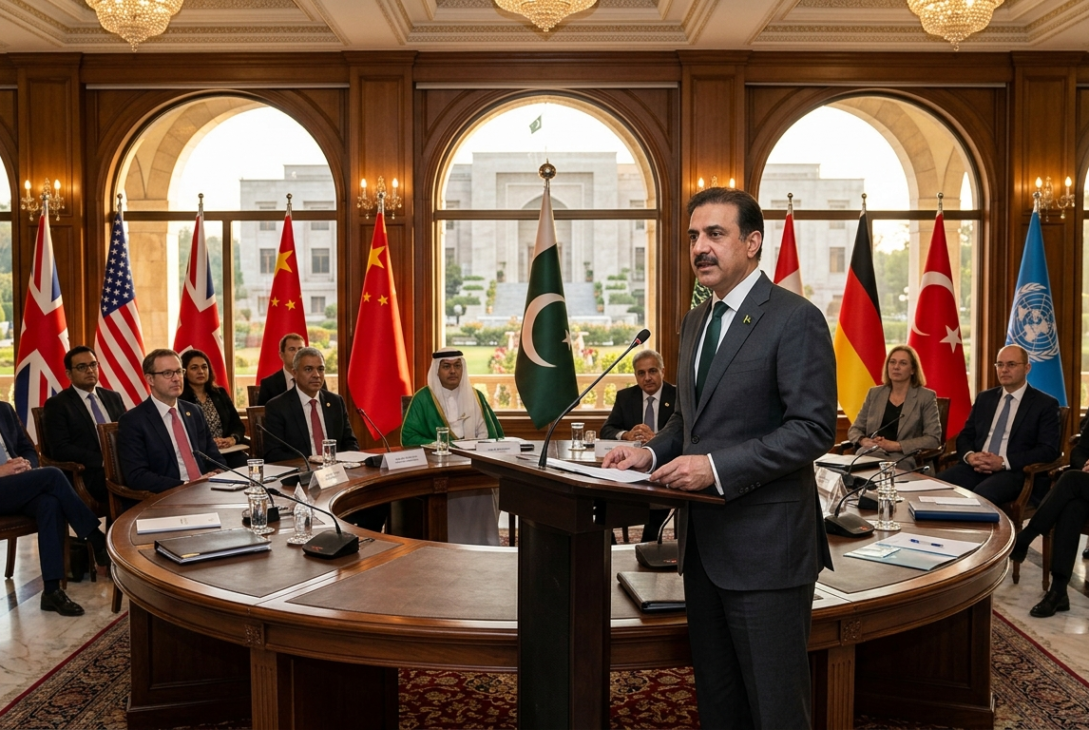
ISLAMABAD — In a diplomatic gambit that few could have predicted a year ago, Pakistan has thrust itself into the centre of one of the world’s most volatile crises, quietly facilitating back-channel communications between Washington and Tehran as their conflict enters its fifth punishing week.
The development marks a significant moment for a country that has long sought to balance its relationships with both the United States — its largest development partner — and Iran, with whom it shares a 900-kilometre border and deep religious and cultural ties.
“We will not leave any stone unturned in bringing both parties to the negotiating table.” — PM Shehbaz Sharif, addressing the National Assembly
How Pakistan Became the Unlikely Mediator
Pakistan’s entry into this diplomatic role was neither accidental nor overnight. Islamabad had been quietly nurturing ties with both sides for months before the conflict escalated. Deputy Prime Minister Ishaq Dar’s visit to Beijing this week underscores how central China has become to Pakistan’s mediation strategy, with Beijing now emerging as a potential guarantor of any future ceasefire framework.
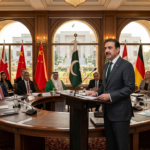
A joint statement from top diplomats of Pakistan, Egypt, Saudi Arabia and Turkey — issued after a high-level meeting in Riyadh — outlined shared principles for de-escalation, including an immediate halt to hostilities and the reopening of the Strait of Hormuz, through which approximately 20 percent of the world’s oil trade passes.
Foreign policy analysts note that Pakistan brings rare credibility to the table. It is a nuclear-armed Muslim-majority state with active military ties to the United States, diplomatic relations with Iran, and a leadership widely respected across the Islamic world. It is precisely this triangulation that makes Islamabad uniquely suited to the task.
The Economic Stakes for Pakistan
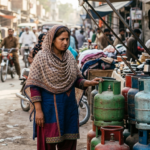
The crisis is far from abstract for ordinary Pakistanis. Disruptions to oil shipping through the Gulf have sent global energy prices surging, and Pakistan — which imports the vast majority of its fuel — is now grappling with the downstream consequences. Gas cylinder prices have risen sharply in April alone, and PIA has warned of existential financial pressure due to spiking jet fuel costs.
Pakistan’s Finance Ministry acknowledged this week that the near-term economic outlook remains ‘cautiously optimistic despite emerging geopolitical risks,’ language that suggests policymakers are watching the Gulf with genuine alarm. Should the conflict deepen, economists warn, Pakistan’s fragile recovery could be derailed before it takes hold.
A 15-Point Ceasefire Plan and Iran’s Conditions
At the heart of Pakistan’s diplomatic effort is a 15-point ceasefire plan, drafted by American envoys and conveyed to Tehran through Islamabad. Iran, for its part, has signalled cautious openness to dialogue while making clear it has its own conditions — particularly around the lifting of sanctions and guarantees against future strikes on its nuclear infrastructure.
Analysts caution that the chasm between Washington and Tehran remains wide. Yet the very fact that communications are flowing — through Pakistan, through Ankara, through Cairo — represents a meaningful departure from the full breakdown in contact that characterised the conflict’s opening weeks.
“Pakistan’s role will be remembered regardless of the outcome. Islamabad has shown it can punch far above its weight diplomatically.” — Mustafa Hyder Sayed, Foreign Policy Analyst, Islamabad
What Comes Next
Pakistan’s diplomatic push has borne early fruit, but senior officials privately acknowledge the road ahead is treacherous. A ground invasion — if authorised by Washington — would almost certainly collapse the current framework entirely. For now, Pakistan, Turkey, and Egypt are urging restraint on all sides while working to convert ceasefire principles into a binding agreement.
For Prime Minister Shehbaz Sharif, success in this endeavour would represent a defining foreign policy legacy. For Pakistan’s 240 million citizens, it could mean the difference between manageable economic headwinds and a full-blown crisis.