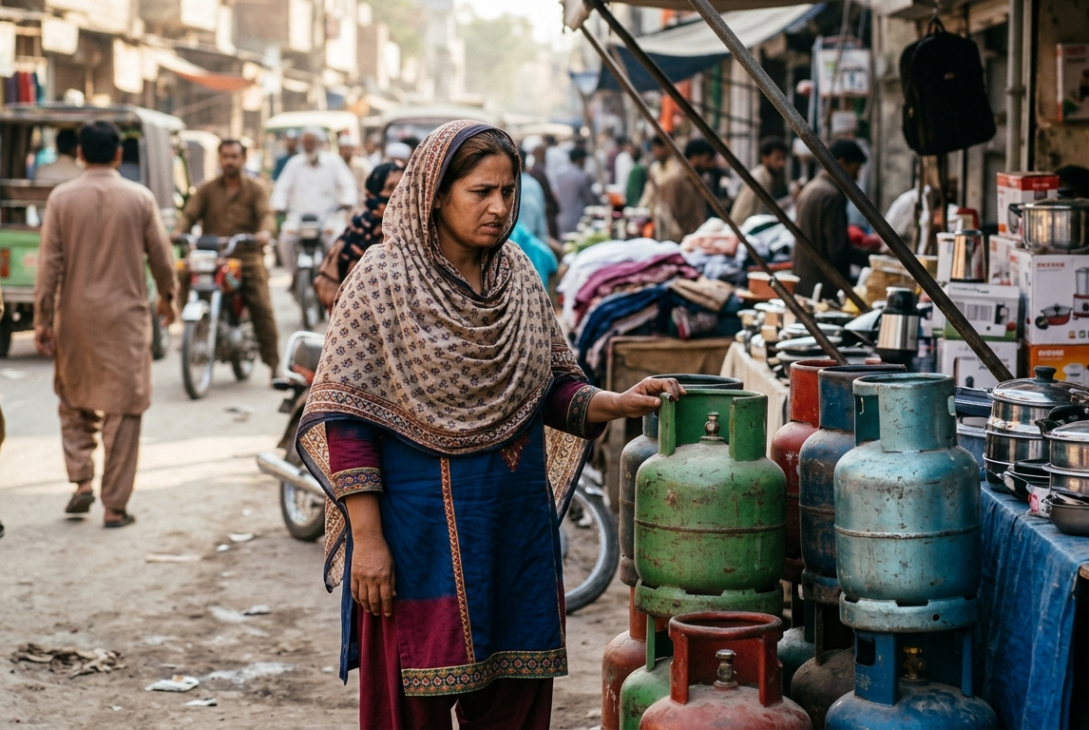
ISLAMABAD — Millions of Pakistani households woke this April to find their gas bills dramatically higher, as the price of an 11.8-kilogram domestic cylinder jumped to Rs3,588 — up from Rs2,664 in March, a rise of nearly 35 per cent in a single month. The increase, driven by a toxic combination of global energy market disruption and chronic domestic supply mismanagement, has landed on families already stretched thin by two years of elevated inflation.
For low-income households in cities like Faisalabad, Multan, and Hyderabad, where gas cylinders are the primary cooking fuel, the price shock is not a statistic. It is a daily calculation about whether to eat a full meal or keep the lights on.
What Is Driving the Surge
The immediate trigger is the ongoing US–Iran conflict, which has disrupted shipping through the Strait of Hormuz and pushed global oil and gas prices sharply higher. Pakistan, which imports a significant share of its liquefied petroleum gas, has been unable to shield domestic consumers from the full force of international price movements — in part because its foreign exchange reserves, while recovering, remain too fragile to absorb prolonged subsidy expenditure.
Deeper structural factors are equally important. Pakistan’s domestic gas production has been in long-term decline, its pipeline infrastructure is ageing, and successive governments have postponed the politically painful task of calibrating retail prices to cost-recovery levels. The result is a system perpetually one external shock away from crisis.
“We will not leave the economically weaker section of society alone in this hour of difficulty.” — Prime Minister Shehbaz Sharif
PIA on the Brink
Pakistan International Airlines is also sounding the alarm. The airline’s chairman, Arif Habib, warned this week that PIA could be ‘forced to shut down’ if jet fuel rates — which have risen 150 percent — are not brought under control through state intervention or renegotiated supplier contracts. The warning comes as PIA was celebrating a milestone of its own: the launch of a new direct Islamabad–London service, inaugurated with considerable fanfare.
The airline’s plight encapsulates a broader paradox in Pakistan’s economy — genuine ambition and real achievement coexisting with fundamental vulnerability. PIA’s London route represents a commercial breakthrough; the fuel cost crisis could render it commercially untenable within months.
Government Response and Relief Measures
Prime Minister Shehbaz Sharif convened an emergency cabinet meeting to discuss relief options for low-income households. Officials indicated that targeted subsidies for the bottom two income quintiles are under consideration, with provinces being consulted on implementation mechanisms. A final recommendation is expected within days.
The Finance Ministry’s monthly update, released Tuesday, described the near-term economic outlook as ‘cautiously optimistic despite emerging geopolitical risks’ — language that analysts interpreted as a carefully worded acknowledgement that the situation could deteriorate rapidly if the Gulf conflict is not resolved.
Impact on Everyday Life
In markets across Punjab and Sindh, traders report that transportation costs have already begun to feed through into food prices. Tomatoes, which require refrigerated haulage, have risen noticeably. Restaurant owners in Lahore say their operating costs have increased by as much as a fifth since mid-March. And exporters — particularly in the textile sector — are warning that delayed export permissions are compounding the damage, with foreign exchange earnings being foregone at precisely the moment Pakistan can least afford it.
The government’s political room for manoeuvre is constrained. Any fuel subsidy must be financed in a budget already under pressure from debt servicing costs and a fragile tax base. And the IMF programme — which has been Pakistan’s financial backstop — includes conditions that limit the extent of energy price manipulation. It is a triangle without easy exits.